Crazy Time Live Casino Game in the UK
 Available in GB
Crazy Time combines a real-time studio stream with online betting controls, while site checks and play options come with their own trade-offs.
- What the Live-Casino Format Actually Involves
- Playing Online: The Practical Trade-Offs
- Casino Sites and the UK Licence Check
- Where You Can Play—and What to Check First
- Choosing a Site Without Falling for “Best” Claims
- Strategy Talk, House Edges, and What We Can Verify
- A Demo Is for Trying the Format, Not for Payouts
- Free Play: Know What It Can—and Can’t—Do
- “Not on GamStop” Claims and the UK Licence Question
- Bonuses, Free Spins, and the Terms That Matter
What the Live-Casino Format Actually Involves
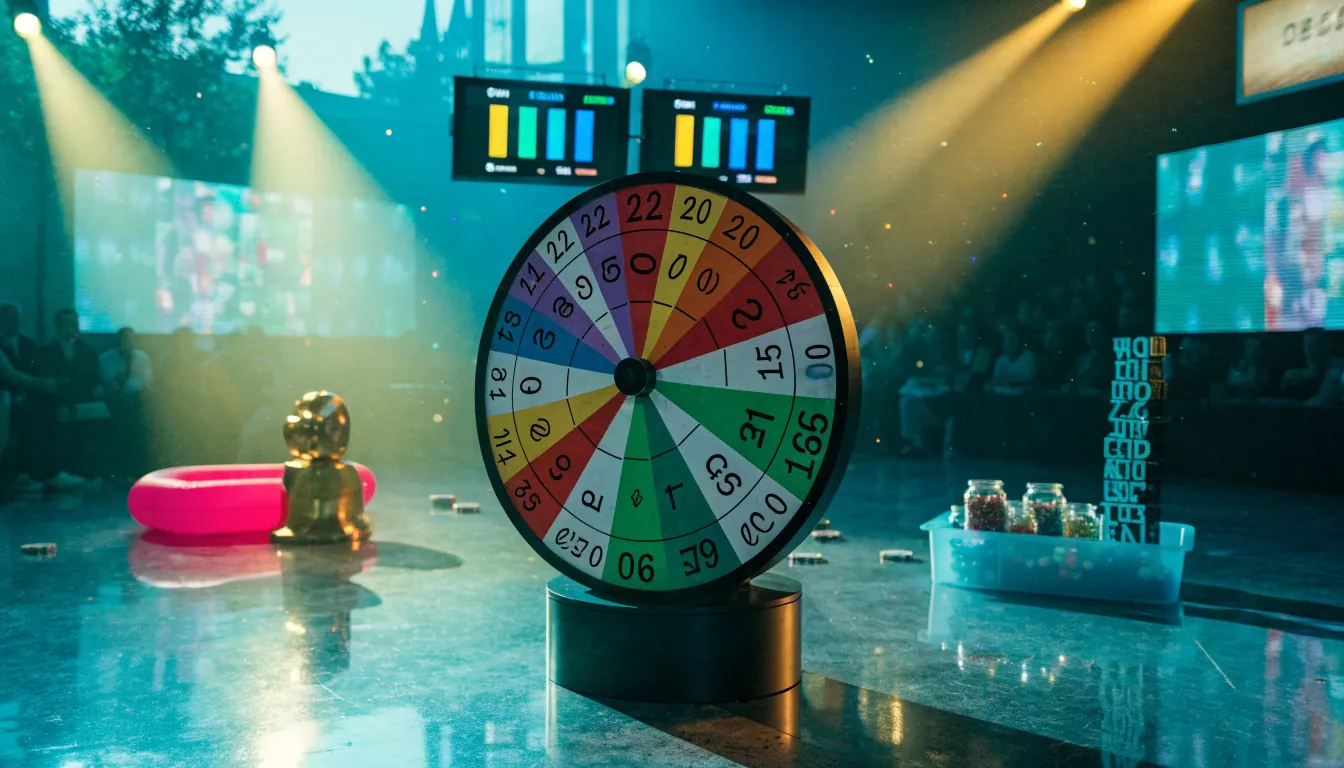
If you are looking at Crazy Time as a live casino game, it helps to separate the broad live-dealer format from the details of that particular title. In a live game, gameplay is streamed in real time from a studio where a human dealer is present. You follow the stream and place bets through controls on your screen. That is the basic arrangement; the name alone does not tell you exactly how a particular game works.
I used to think “live” meant the online version would feel much like being at a casino table. That is not quite the right comparison. You are watching a studio feed through a screen, while the interface is where you make your selections. The dealer is part of the streamed game, but you are not physically at the table. The format joins a real-time studio presentation with online betting controls.
That distinction matters when you are trying to work out what you are looking at. A live-dealer game is not simply a video of a completed round, and it is not just an animation presented as a live table. The stream shows gameplay as it happens in the studio. Your bets, meanwhile, are submitted through the on-screen interface. The picture and the controls serve different purposes, even though they appear together in the same game window.
When you’re choosing where to play Crazy Time in the UK in 2026, payout timing is one practical detail to check. Use these verdicts as a quick reference alongside your own checks of game access and terms.
Payout speed: 1-3 business days Revery Play lists a payout speed of 1–3 business days, giving you a stated timeframe to consider.
Payout speed: 1-3 business days Chanze lists payouts as taking 1–3 business days. That gives you a clear payment-speed detail to weigh when considering it.
Payout speed: 1-3 business days Dieselwin’s stated payout speed is 1–3 business days, a useful practical point for your shortlist.
Payout speed: 1-3 business days NightWin lists a payout timeframe of 1–3 business days, so you have a stated speed to factor into your choice.
Payout speed: 1-3 business days EvoSpin gives a payout speed of 1–3 business days. Consider this stated timeframe as one part of your decision.
Payout speed: 1-3 business days Britsino lists payouts as taking 1–3 business days, offering you a specific payment-speed detail to check.
Payout speed: 1-3 business days SlotoSport’s stated payout speed is 1–3 business days, which may help you assess payment timing.
Payout speed: 1-3 business days x3bet lists a payout timeframe of 1–3 business days. You can use that as a practical point when reviewing your options.
Payout speed: 1-3 business days Jetsetspins states a payout speed of 1–3 business days, giving you a timeframe to keep in mind.
Payout speed: 1-3 business days NightLuck lists payouts as taking 1–3 business days, a stated detail to consider when choosing where to play.
The interface is the part you use to act. It gives you a way to place bets, while the live stream lets you watch the studio gameplay. Exactly what choices appear, how a round proceeds and what outcomes are possible depend on the individual game. I would not assume those details from the broad label “live casino”, or from the fact that a title is presented as a game show. Check the game’s own information rather than filling in the blanks from another live table you have seen.
That is where I have made a familiar mistake: treating a format label as if it were a rulebook. It is easy to see a live feed and assume you already understand the game, especially if the screen looks lively or familiar. But “live dealer” tells you about the real-time studio and human dealer; it does not, by itself, explain the rules, betting options or payout structure of Crazy Time. Those need to be understood separately.
It is also worth keeping the word “casino” in perspective. In this context, Crazy Time casino usually means looking for a casino site that offers the game, not a different version of the studio format. The live element still refers to the stream and the betting interface. Whether a particular UK casino carries the title is a separate question from how live-dealer games work in general.

I would begin by observing the screen without rushing to place anything. Notice which part is the live feed and which part contains the controls. Then read the game’s own explanation before deciding whether its rules make sense to you. That is not a clever tactic; it is just a way to avoid confusing presentation with understanding. A polished stream can make a game feel self-explanatory when it is not.
For someone searching for Crazy Time live casino access in the UK, the useful first idea is simple: live play means a real-time studio stream with a human dealer, while your bets are handled through an on-screen interface. It does not mean every game shares the same rules, or that the title’s features can be inferred from the format. I would rather know what the screen actually lets me do than trust a label or a dramatic presentation.
Keep that distinction in mind as you look at any live game. The stream shows the studio gameplay; the interface is how you participate. The particular game supplies its own rules. Those are separate pieces, and treating them that way makes the whole setup easier to understand. No guesswork needed.
Playing Online: The Practical Trade-Offs
Searching for a Crazy Time live casino game can make the experience sound as simple as opening a page and placing a bet. The practical side is less glossy. Live games move more slowly than digital versions, tend to have higher minimum bets, and depend on a stable internet connection. Those are not tiny details around the edges; they shape how long you wait, what you can stake and whether the session feels manageable.
Attention: Live games typically have higher minimum bets than digital versions and depend on a stable internet connection to avoid frustrating interruptions.
I’ve made the mistake of judging a game only by how it looked on screen. A live table can be lively to watch, but the pace includes real-time dealing and pauses between decisions. You are not moving through rounds at the speed of a purely digital game. If you expect constant action, that waiting can feel dull—or tempt you to place bets simply to have something to do. That is a poor reason to bet.
Give yourself room to follow what is happening without treating every pause as an invitation to act. A live game’s slower rhythm is part of the format, not a technical fault to overcome. You can watch a round without betting, and you can stop rather than trying to make the table feel more exciting by increasing your activity. Less frantic is not the same as less risky.
The minimum bet matters before the game starts. Live games generally have higher starting stakes than digital versions, so the amount you need to commit may not match what you are used to seeing elsewhere. If the displayed minimum is above the amount you planned to spend, that is a reason to leave the table, not to stretch your budget. I’ve talked myself into a stake that felt “close enough” and then spent the session thinking about the money instead of the game. Not worth it.
Set a budget before opening the table, and treat it as a firm stopping point. Don’t raise it because a round went badly, or because you think a win is due. A live feed can make every result feel immediate, but that feeling does not give you a reason to chase losses or winnings past your limit. If you notice yourself changing the plan mid-session, take that as a cue to stop.

Connection is another part of the cost, even when it does not appear beside the betting controls. Live gameplay needs a stable internet connection. A weak signal, interruptions or a device that keeps dropping its connection can make it difficult to follow the action and use the on-screen controls confidently. That can turn a relaxed session into a frustrating one, especially if you are trying to make a decision while the stream is struggling.
Before you begin, think about where you will play. A reliable connection is more useful than a large screen if the stream keeps cutting out. If your signal is inconsistent, wait until you can connect more reliably rather than hoping it will hold for the whole session. I have underestimated this before: the game may be ready, but a patchy connection leaves you distracted and second-guessing what you have seen. Bad setup, bad mood.
Your device also affects how comfortable it is to follow a live table. Choose a screen and position where you can see the stream and the betting interface clearly, and avoid trying to play while doing something that repeatedly pulls your attention away. You do not need to turn the session into a production. You do need to be able to tell what is happening and make deliberate choices rather than tapping in a hurry.
This is especially worth considering if you are comparing an online casino Crazy Time listing with a digital game you already know. The label may attract you, but the format changes the practical experience: rounds take longer, minimum bets are higher, and the stream needs a dependable connection. Those trade-offs apply to live casino play generally; they do not tell you anything about a particular game’s rules or outcomes.
- Set a firm budget before opening the table
- Ensure your internet connection is stable
- Treat pauses in gameplay as a normal part of the format
- Raise your budget to chase losses or wins
- Bet simply because the action feels slow
- Play on a device that pulls your attention away
I find it helps to decide what a session is for before opening it. If you want something quick, a slower live table may not suit that mood. If you are happy to watch the action unfold at its own pace, allow for the extra time and do not treat the gaps between rounds as a reason to stake more. There is no prize for staying longer.
Live play can be enjoyable, but it asks for patience, a suitable stake and a connection that holds up. Check that your intended budget fits the table’s minimum, settle somewhere with a stable signal, and stop when your limit is reached. This is entertainment, not gambling advice—and a sensible setup cannot remove the risk of losing money.
Casino Sites and the UK Licence Check
When you look for a place to play Crazy Time in the UK, separate two questions: whether the operator is legally allowed to serve you, and whether you like what it offers. The first has a straightforward answer. A live-dealer casino serving UK players must hold a licence from the UK Gambling Commission (UKGC). Without that licence, it is not a legal UK casino.
I used to treat a polished site and familiar-looking game page as reassuring signs. They are not a substitute for checking who operates the casino and whether that operator is licensed. A professional design tells you about presentation, not regulatory status. Neither does a game being advertised as available.
The UKGC is the regulator, and its website is the place to check licensing information: gamblingcommission.gov.uk. Make sure the licence relates to the operator behind the site you are considering, rather than assuming that a logo or a general claim proves it. If you cannot establish that the operator holds the relevant UKGC licence, do not treat the site as a legal UK option.
That check is a starting point, not a seal of approval for every part of the business. A licence does not mean a particular casino is the right fit, that every promotion is worthwhile, or that you will have a good experience. It does not turn marketing language such as “trusted” or “top-rated” into evidence. I read those words as advertising until there is something concrete behind them.
This matters when comparing Crazy Time casino sites in the UK. A list labelled “best” can blur together two different things: a site’s legal status and someone’s opinion about its offer. A licence answers the first question. It does not create a ranking, guarantee an outcome, or tell you whether the site suits your needs. I would not use a list position as a shortcut for the licence check.
The same goes for claims attached to bonuses, scores or strategies. A casino promotion does not establish that the operator is licensed, and a reported score does not tell you whether the site is legitimate. Keep those claims separate from the basic legal check. Before deciding whether an offer is relevant, read its terms; do not assume that a bonus makes a casino safer or that it changes the operator’s regulatory status.
Legal Requirement
If you cannot establish that an operator holds a valid UKGC licence, do not treat the site as a legal UK option.
I also avoid treating a licence as a promise that gambling is risk-free. It is a regulatory requirement for a legal UK operator, not a way to remove the possibility of losing money. Set a budget before you play and stick to it. If the site’s legitimacy is unclear, walking away is a better move than trying to talk yourself into trusting it.
So the licence check is deliberately plain: identify the operator, confirm that it holds a UKGC licence, and treat that confirmation as a threshold rather than a recommendation. It does not tell you which casino is “best”. It tells you whether the operator meets the basic licensing requirement for serving UK players. This is entertainment, not gambling advice.
Where You Can Play—and What to Check First
If you want to play Crazy Time live, start by opening the game at the table itself rather than trusting a tile, banner or short preview. The name tells you what to look for, but it does not tell you the table’s current rules, betting options or payout terms. I’ve learned not to treat a bright screen as an explanation. Check the information supplied with the game before putting money down.
The useful test is simple: can you find and understand the rules and paytable before you place a bet? Read the rules for the version you have open, then check how the available bets are settled and what the listed payouts mean. Don’t fill in gaps from something you saw in a clip or from another game with a similar presentation. If an explanation is unclear, pause and look for the game’s help panel or table information. If you still cannot work out what a bet means, leave it alone.
That matters especially when the game is moving. Live tables run more slowly than digital versions, and the time between actions can feel different from playing a game on your own screen. Give yourself room to read the displayed information without feeling hurried. A stable internet connection matters too: a stream that keeps stalling makes it harder to follow what is happening and to make deliberate choices.
Before joining, check the minimum bet shown at that table. Live games can have higher minimums than digital versions, so don’t assume the amount you are comfortable with elsewhere will be available here. If the smallest permitted stake is already more than you planned to spend, that table is not a fit. No need to negotiate with yourself.
I also separate what I can see from what I’m guessing. A wheel, animation or host may make a game look easy to read, but appearance is not a substitute for the written rules. I wouldn’t assume that a feature works a particular way just because it resembles something from another game. Confirm the terms on the screen you are actually using.
Set your budget before the session, and stick to it. I used to think I could decide as I went; that is a good way to let the pace of a table make decisions for you. If the stream is unreliable, the rules are hard to follow, or the minimum stake does not suit your budget, step away rather than trying to make the table work.
There is no need to pick a site because it calls a game “top” or “exclusive”. At the point of play, the practical questions are whether the rules and paytable are clear, the connection is steady, and the table’s minimum bet suits you. This is entertainment, not gambling advice—and a careful check cannot turn a wager into a sure thing.
Before Joining a Table
- Read and understand the game rules and paytable
- Confirm the minimum bet fits your planned budget
- Verify that your internet connection is steady
- Check that the listed payouts are clear
Choosing a Site Without Falling for “Best” Claims
“Best” sounds like a verdict. Often it is just a label attached to a page that wants you to sign up. I’ve learned not to treat a confident ranking as proof that one casino will suit me better than another. With a live game such as Crazy Time, the useful comparison is less glamorous: can you actually play comfortably there, and does the pace fit you?
Live games move more slowly than digital versions, and their minimum bets are higher. That changes the feel of a session. You are not just comparing a game’s name or the look of a page; you are deciding whether the time between actions and the amount required to take part work for you. A site can be heavily promoted and still be a poor fit if those basics feel wrong.
Connection matters, too. Live gameplay needs a stable internet connection, so consider where and how you would play before getting drawn in by claims about a “seamless” experience. That word means little if your connection keeps interrupting the stream. I would rather be realistic about my setup than assume a polished advert describes what I will see on my own screen.
The same goes for pace. A live table is not necessarily a better version of a digital game; it is a different way of playing, with more time spent following events as they unfold. If you prefer quick, uninterrupted rounds, that slower rhythm may become frustrating. I have mistaken a lively presentation for a pace I would enjoy. Not the same thing.

When comparing sites, look for plain information about the experience rather than grand promises. Can you understand what the page offers before committing? Is the live format clearly identified? Does the game fit the way you want to play, given its pace, connection demands and minimum stakes? Those are modest questions, but they are more useful than an unsupported “best Crazy Time casino” label.
Searches for Crazy Time casino results can also lead to claims that sound more informative than they are. A result or record of previous play does not tell you what will happen next, and a list of past outcomes is not a reliable way to choose a site or plan a session. I would not use result-tracking claims as a reason to trust one operator over another. Old numbers, new spin. Still no promise.
And despite the occasional “Crazy Time slot” wording, don’t assume a page is describing a digital slot simply because it uses that phrase. Check what kind of game is actually being offered and whether the live format suits you. I would judge a site by the experience it can clearly explain, not by a superlative, a results page or a promise dressed up as certainty.
Strategy Talk, House Edges, and What We Can Verify
“Strategy” can sound like a way to turn a game into a dependable income stream. I used to give systems more credit than they deserved. A tracker, a staking pattern or a tidy spreadsheet can organise your choices, but it cannot make a random result behave differently. That distinction matters when you look for a Crazy Time strategy or a record of its past rounds: a history of outcomes is not a forecast.
A history of past outcomes is not a forecast; trackers and staking patterns cannot make a random result behave differently.
The same goes for a casino tracker. It may display or organise information, but past results do not determine future spins or Lightning Numbers. Treating a streak as a signal is an easy trap: once you expect the next result to “correct” the last one, it is tempting to keep betting until your theory feels right. I have made that mistake. The tracker did not change the game; it changed how long I stayed.
House-edge figures need the same care. They belong to particular games and bet types, not to live casino games as one broad category. In roulette, a straight-up bet has a stated house edge of 2.9%, while other bets have a 2.7% edge. French Roulette changes the outcome for an even-money bet when the ball lands on zero: the loss is reduced by half. American Roulette has an extra double-zero pocket, and the stated chance of winning is 1 in 38, compared with 1 in 37 on European Roulette.
Those roulette figures describe roulette. They do not tell you the edge, expected return or best approach for Crazy Time. Borrowing a number from another game because both appear in a live casino is bad maths dressed up as research.
Blackjack offers another useful example of what strategy can and cannot do. The aim is to beat the dealer without taking your hand above 21, but the game still has a house edge. A staking system such as Martingale does not remove it; increasing stakes after losses can make a losing run more expensive. I know the appeal: a simple rule feels safer than making decisions under pressure. It is not protection.

So when you come across claims about Crazy Time’s history or a winning system, look for what the claim actually establishes. A record can show what has happened, not what must happen next. A pattern someone has noticed is not proof of an advantage. And a house-edge percentage from roulette or blackjack cannot be pasted onto a different game.
I now treat strategy claims as prompts to check the reasoning, not instructions to follow. Set a budget before playing and stick to it; if you find yourself raising it to recover losses or chase a run, step away. No system can promise a result.
A Demo Is for Trying the Format, Not for Payouts
A demo can help you get used to the shape of a live game: watching events unfold on screen, following what the controls do and seeing how placing a bet feels without risking your own money. That is useful for orientation. It is not a preview of what you will earn, and it cannot turn practice into a cash result.
I used to blur those two ideas. If a game felt familiar in free play, I took that as a reason to expect the same comfort—and perhaps the same luck—when money was involved. Familiarity can make the interface less confusing; it does not make outcomes predictable. A demo is practice, not evidence that a real-money session will go well.
People looking for a Crazy Time casino demo should be careful not to assume that one is available just because the phrase appears on a page or in a promotional label. Check what is actually being offered and whether it is a free-play version or a real-money game. The word “demo” should describe the way you can play, not suggest that winnings can later be withdrawn.
Caution: Demo results are for practice only; free-play credits cannot be cashed out as real money.
That distinction matters even when the screen looks much the same. Free-play credits are not money you can cash out. A result shown in a practice session does not become a real payout, and a run of favourable results does not tell you what will happen next. If the aim is to learn where to click or how the game is presented, free play may serve that narrow purpose. If the aim is to make money, it cannot do that job.
I also wouldn’t treat a demo as a way to prove that a game suits your budget. Playing without money at stake can feel different from deciding whether to risk your own funds. Before switching to real-money play, pause and set a budget you can afford to lose; don’t increase it because practice seemed easy or because you want to recover a result. No chasing.
“Top” labels and casino tips do not change what a demo is. A confident-sounding page may make a free version seem like a route to an advantage, but practice cannot guarantee a payout or predict future results. Keep the purpose modest: get familiar with the presentation, then decide whether you want to play at all. You do not need to move from free play to real money.
This section is for entertainment purposes only, not gambling advice. If you choose to play, treat any money you stake as money you may lose.
Free Play: Know What It Can—and Can’t—Do
Free play can be useful for getting a feel for a game without staking your own money. But it has a hard limit: it does not pay out real winnings. If a page describes a Crazy Time free casino game, treat “free” as a description of the play mode, not as a route to cash.

That distinction sounds obvious until a session starts to feel convincing. You may be following the same on-screen action as a real-money player, but pretend credits are not a balance you can withdraw. A good run in free play does not create a claim on money, and a bad run does not mean you need to put funds in to make it right. I have made the mistake of treating a practice session as a promise of how paid play will go. It isn’t. Different stakes, different feelings.
The same goes for searches for Crazy Time casino free spins. Free spins and free play are not interchangeable terms, and neither wording should be taken as proof that a particular offer exists or can be used on a live game. Read what the page actually says rather than filling in the gaps from a headline. “Free” can mean only that you can try something without paying for that session; it does not mean that the operator will convert the result into a payout.
A Crazy Time casino review or a set of reviews may describe access as free, but the useful question is what that access permits. Does it let you explore the format, or is it simply promotional wording around a paid product? Keep the answer narrow: free access can let you try, but it cannot show that you will win real money. Nor should a free session be treated as evidence that a paid session will behave the same way for you.
Free Play Limits
- Free play is for exploring the format, not for earning payouts
- Pretend credits cannot be withdrawn as real cash
- Success in a free session is not evidence of future real-money results
I would keep the boundary clear: no deposit just to turn pretend results into real ones, and no chasing a win because a free session went well. Set a budget before any real-money play and stick to it. This is entertainment, not gambling advice. Free play is practice, not a payout.
“Not on GamStop” Claims and the UK Licence Question
A casino described as “not on GamStop” is making a claim about its relationship with the self-exclusion scheme, not telling you whether it is legally allowed to serve customers in Britain. Those are separate questions. You cannot work out a site’s GamStop status from the wording of its licence, or assume that a claim about GamStop answers the licensing question.
For a live-dealer casino serving UK players, the key legal requirement is a licence from the UK Gambling Commission. Live-dealer casinos are legal in the UK when they hold that licence. A site’s location, branding, or use of a familiar game name does not replace that requirement.
I used to treat a confident label as if it settled more than it did. It doesn’t. “Not on GamStop” is not a synonym for “licensed”, “safe” or “suitable”; equally, the label alone does not establish what licence a casino holds. Don’t let the two checks blur together.
If you come across a site advertising a Crazy Time table while also describing itself as outside GamStop, don’t take either claim as proof of the other. Check the operator’s UK Gambling Commission status directly, and treat GamStop participation as a distinct matter. I’m not naming or recommending casinos under that description: the label itself is not a reason to choose one.
The practical point is simple: look for the legal position first, not a promise of access that sounds more appealing because it avoids a safeguard. A casino serving British customers must meet the UK licensing requirement to offer live-dealer gambling legally. A claim about self-exclusion cannot stand in for it.
And don’t read more into the licence than it says. It establishes the operator’s UK regulatory status; it does not, by itself, tell you whether that operator is on GamStop. Keep those questions separate. No shortcuts.

Bonuses, Free Spins, and the Terms That Matter
A “welcome bonus” can sound like money set aside for a live table. In practice, read the offer rather than the headline. A specialist review reports that most UK welcome offers are free spins on slots, which cannot be used at live tables. So a search for a Crazy Time casino bonus does not mean you can apply a slot promotion to that game.
A deposit offer may have different conditions, but the label alone tells you little. Check which games qualify, whether live games contribute towards wagering requirements, and whether there are maximum bet limits while an offer is active. Those details can change what a bonus is worth to you. I have skimmed past the small print before and then wondered why play at a live table barely moved the requirement. My mistake.
Live games may count for only a small share of wagering, with one stated example assigning them a 10% weighting. That is not a universal rate: the terms for the specific offer decide how eligible play is counted. If live games carry reduced weighting, a large-looking bonus may take more qualifying play to clear than you expected.
The same caution applies to offers described as no-deposit bonuses. Do not assume they cover a live game, or that a bonus balance can be withdrawn without conditions. Look for the eligible-game list, contribution rates, maximum bet rules and any withdrawal conditions before opting in. If those terms are unclear, I would not treat the promotion as usable for a particular game.
I also keep “payouts” separate from bonus value. A promotion is not a promise of winnings, and a bonus balance is not automatically cash you can withdraw. Read the terms first, then decide whether the offer fits how you actually want to play. Set a budget before playing, and stick to it; do not chase losses or winnings beyond that limit.
This is entertainment, not gambling advice.
How do you play live roulette?
You place bets through the on-screen interface while a dealer spins a physical wheel. You win if the ball lands on a number you selected.
What is the difference between European and American Roulette?
European Roulette has one green pocket, 0, while American Roulette has two, 0 and 00. The odds of winning are 1 in 37 on a European wheel and 1 in 38 on an American wheel.
Why does the dealer always win in blackjack?
The dealer does not always win: players aim to beat the dealer by reaching 21 without going over. Blackjack still has a house edge, and betting systems such as Martingale can lead to losses.
How do you choose a live dealer casino?
In the UK, choose a live dealer casino that holds a UK Gambling Commission licence.
Prepared by the Betninja editorial staff.