French Roulette Online Casinos in the UK: Rules & Odds
 Available in GB
A practical guide to French roulette rules, table formats, stakes and bonus terms, with the wheel’s zero at the centre of the odds.

- French Roulette’s Edge Starts with the Zero
- What “Best” Means When You’re Picking a French Roulette Casino
- Live French Roulette: The Wheel, the Dealer and the Safeguards
- Low Stakes, Standard Tables and the Cost of a Losing Streak
- Inside an Online French Roulette Game
- Finding French Roulette and Reading the Bonus Terms
- Premium Play Without the “VIP” Fog
- RNG, Live and Speed Roulette: Different Ways to Play
- Playing French Roulette Online Without Chasing Losses
- When the American Wheel Changes the Deal
French Roulette’s Edge Starts with the Zero
The first thing I look at on a roulette table is the zero. It is easy to get distracted by the layout, the graphics or the pace of the game, but the number of green pockets changes the basic odds before you place a bet. That is the point where French roulette separates itself from the other standard versions.
European roulette has 37 pockets: numbers 1 to 36 and one zero. American roulette adds a double zero, giving it 38 pockets. That extra green pocket matters because it creates another outcome on which ordinary bets such as red or black lose. The bet may look the same on the felt, but the wheel underneath it is less forgiving.
The house edge gives a useful way to compare that built-in disadvantage. On a European wheel, it is 2.70%. On an American wheel, it is 5.26%. Those figures are not a prediction of what will happen in a short session; they describe the mathematical advantage held by the casino over repeated play. A lucky run can happen on either wheel. The underlying edge does not disappear because it has.
French roulette’s advantage starts with the zero rules. La Partage applies to even-money bets, such as red or black, even or odd, and high or low. If the ball lands on zero, half of that bet is returned rather than the entire stake being lost. With La Partage, the house edge on those bets falls to 1.35%.
That is a meaningful difference, though it is easy to overlook when the table appears almost identical to a European one. I have certainly treated roulette layouts as if they were interchangeable, then wondered why the small print mattered. The zero rule is not small print. It changes what happens to a bet when the least helpful pocket wins.
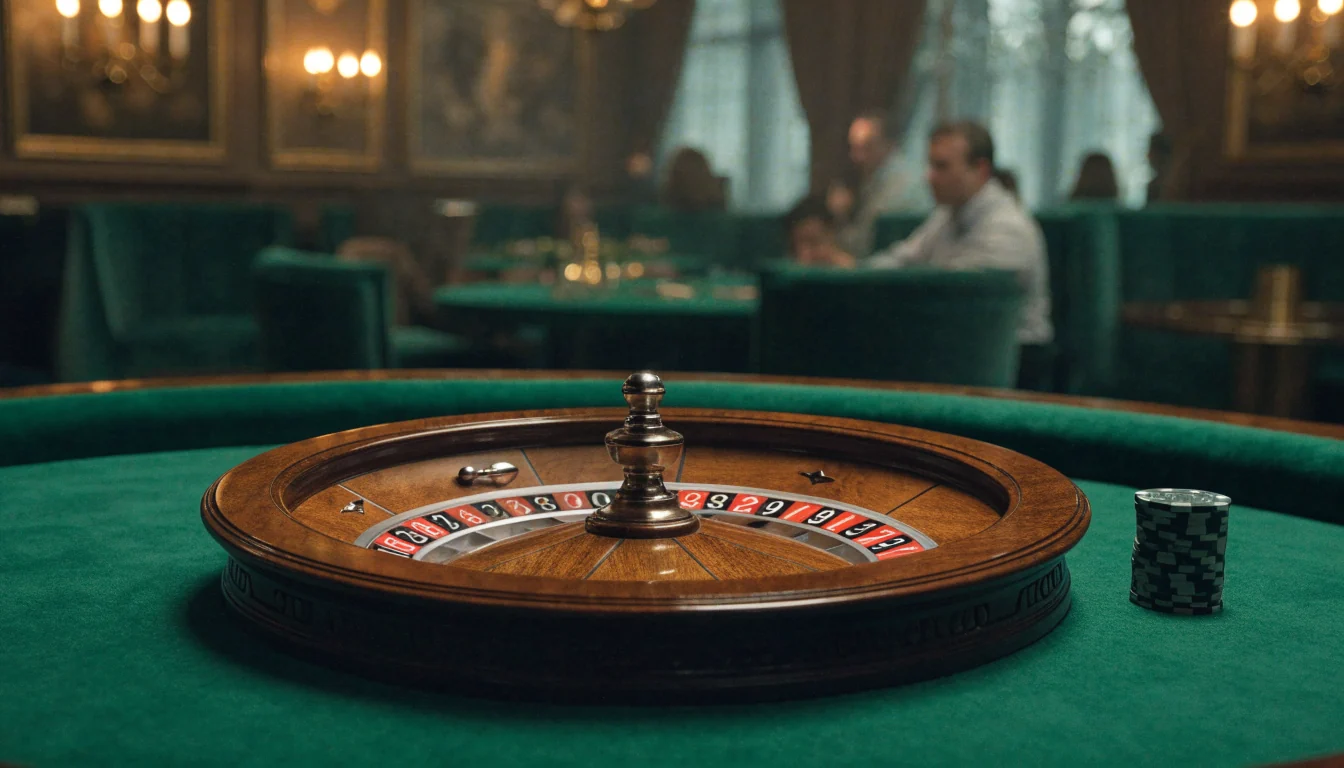
En Prison offers another form of protection on even-money bets when zero appears. Instead of settling the bet as a full loss, the stake is held for the next spin; if the bet wins on that spin, the stake is returned. The exact table rules should be read before play, but the purpose is clear: zero need not turn an even-money wager into an immediate full loss. Together, La Partage and En Prison explain why French roulette has the lowest house edge among standard variants.
There is a distinction worth keeping in mind: La Partage’s 1.35% figure applies to the even-money bets covered by that rule. It is not a blanket figure for every bet on the table, nor does it mean that every spin is more likely to land in your favour. A single-number bet and an even-money bet are different wagers with different chances and payouts. The zero rule changes the treatment of a particular class of bets; it does not make the wheel predictable.
When you compare French and European roulette, the important question is not just how many pockets are shown. Their single-zero structure may look familiar, but French rules can soften the impact of zero on qualifying even-money bets. European roulette has the standard 2.70% house edge, while the French rules bring the edge down on those bets when La Partage applies. En Prison can also reduce the sting of zero, according to the table’s rules.
The American version is the sharper contrast. Its double zero means there are more green outcomes than on a European wheel, and its 5.26% house edge reflects that added disadvantage. If I am choosing between tables and the goal is to avoid giving away extra edge unnecessarily, the double-zero layout is the one I notice first. The difference is built into the wheel, not hidden in a clever betting system.
Lowest house edge among standard variants due to zero rules like La Partage and En Prison.
Single-zero wheel with a standard house edge of 2.70%.
Double-zero wheel resulting in a higher house edge of 5.26%.
This is why a French roulette casino can be worth seeking out if you prefer even-money bets. The label alone is not enough, though: the useful detail is whether La Partage or En Prison is actually in force on that table. Rules can be part of the game description rather than something obvious in the interface, so I would check them before starting. A French-style layout without the relevant rule is not the same proposition as a table where the rule applies.
None of this turns roulette into a game with a dependable outcome. It simply lets you compare the house edge attached to different wheel and rule combinations. French roulette offers the lowest edge among standard variants because its zero rules give qualifying even-money bets better treatment; European roulette has a single zero but not that same reduction, and American roulette adds a double zero. The green pocket still matters. It just matters less on the French table when the rule is in play.
That is the real distinction: not a promise of winning, but a less costly version of the same uncertainty.
What “Best” Means When You’re Picking a French Roulette Casino
When choosing a UK casino for French roulette, you may also want to consider practical details such as payout speed. Use the stated timing below as one point of reference while assessing your options.
Payout speed: 1-3 business days Revery Play lists a payout speed of 1–3 business days. You can use that stated timeframe as a practical detail when considering it.
Payout speed: 1-3 business days Chanze lists a payout speed of 1–3 business days. You can take this stated timeframe into account when weighing your options.
Payout speed: 1-3 business days Dieselwin lists a payout speed of 1–3 business days. This gives you a stated timeframe to consider alongside your roulette preferences.
Payout speed: 1-3 business days NightWin lists a payout speed of 1–3 business days. You can use this as one practical point of reference.
Payout speed: 1-3 business days EvoSpin lists a payout speed of 1–3 business days. Keep that stated timeframe in mind as you assess your options.
Payout speed: 1-3 business days Britsino lists a payout speed of 1–3 business days. That gives you a stated payout timeframe to consider.
Payout speed: 1-3 business days SlotoSport lists a payout speed of 1–3 business days. You can factor this stated timing into your decision.
Payout speed: 1-3 business days x3bet lists a payout speed of 1–3 business days. Treat this as one practical detail to consider when choosing.
Payout speed: 1-3 business days Jetsetspins lists a payout speed of 1–3 business days. You have a stated timeframe to use as a reference.
Payout speed: 1-3 business days NightLuck lists a payout speed of 1–3 business days. You can consider this stated timing as part of your assessment.
“Best” is a slippery word on a casino page. It can mean the biggest welcome offer, the shiniest table or simply the first result in a lobby. I’ve learned to ignore the sales pitch for a moment and check whether I can verify the basics. For French roulette, that means looking at the operator’s legal status, finding the game’s RTP information and seeing whether the account controls are clear before I put money in.
Start with the licence, not the branding
For a casino serving customers in Great Britain, the operator needs a current licence from the UK Gambling Commission (UKGC). The Commission is the regulator responsible for online casino gambling here; a logo in a footer is not enough to establish that a particular operator is authorised.
I’d check the operator’s legal name and licence details against the Commission’s public register before depositing. Make sure the details match the casino you are actually using, rather than relying on a familiar brand name or a link to a licensing page. If you cannot identify the company behind the site, or the information does not line up with the register, stop there and resolve that before considering the roulette table.

This is a practical check, not admin for its own sake. A platform without a valid UKGC licence cannot legally offer real-money casino gambling to people in Britain. “Trusted” is a marketing word; a verifiable licence is something you can check.
Look for RTP information you can actually access
A casino should make information about a game’s return to player (RTP) accessible, not leave you guessing or force you to rely on a promotional description. Look for the game information panel, help screen or rules page, and check that it clearly identifies the version of French roulette you are opening. If the details are hard to find, vague or seem to refer to a different game, ask customer support before playing.
I wouldn’t treat RTP as a promise about what will happen during a session. It is information to help you understand the game, not a forecast of your results. The useful test here is whether the operator presents it clearly enough for you to make an informed choice. A site can look polished and still make basic game information needlessly difficult to locate.
Casino Verification
- Verify the operator’s legal name and licence on the UKGC public register
- Locate the game information panel to check the RTP
- Confirm the specific version of French roulette being played
- Ensure account controls and financial limits are accessible
That was one of my own bad habits: I used to judge a casino by how quickly I could get to the table. Now I check whether I can get out of the promotional layer and find the rules and game details just as easily. Small test. Worth doing.
Check account controls before funding
A UKGC-licensed operator must verify your age before allowing you to deposit. You should also be prompted to set a financial limit before making your first deposit, with account-level controls available so you can manage limits later. I’d look for those controls in the account area before I start, rather than assuming they will be easy to find once I am in the middle of a session.
The payment rules are another useful check. UKGC licensees cannot accept credit cards for gambling, including credit-card funds routed through a money service business. They also cannot accept wallet payments where the wallet allows credit-card funds to be used for gambling. If a payment option is unclear about how it is funded, check the operator’s explanation instead of assuming every route is permitted.
These details do not tell you whether a particular roulette table will suit you. They do tell you whether the operator is making the basic terms and controls visible before you commit.
Know what happens if something goes wrong
Before choosing a casino, find its complaints procedure and check that it explains how to raise an issue. UKGC licensees must provide an internal complaints process and access to an approved Alternative Dispute Resolution service. That gives you a defined route if you and the operator cannot resolve a dispute directly.
I’d also avoid treating customer reviews as a substitute for these checks. Reviews can help you notice recurring complaints, but they do not confirm a licence, establish the game’s RTP or explain the operator’s formal process. Use them as a prompt to look closer, not as proof.
The same goes for words such as “premium”, “trusted” and “best”. They do not tell you whether the operator is authorised, whether game information is accessible or whether you can find account controls without a hunt. A sensible choice is less about a grand claim and more about verifiable details: the correct company on the UKGC register, clear French roulette information, visible account tools and a complaints route you can understand. If those basics are buried or missing, I move on.
Live French Roulette: The Wheel, the Dealer and the Safeguards
A live French roulette table is not a computer animation pretending to be a wheel. The game is streamed from a studio, where a human dealer spins a real wheel and releases a physical ball. You watch the ball travel around the rim and settle into a pocket; your bets are placed through the on-screen interface.
That physical process is the appeal for me. With an RNG game, the result is generated digitally. In a live stream, you can follow the wheel and dealer as the round unfolds. It feels closer to sitting at a casino table, although you are still playing through a screen and relying on the operator’s live feed and game interface. No magic. Just a wheel, a ball and a result you cannot call in advance.
Live vs RNG
Live roulette uses a streamed physical wheel and human dealer, whereas RNG roulette uses software to simulate spins digitally.
French roulette is not automatically available at every live casino. A lobby may offer several live roulette tables without making clear which wheel uses French rules, so check the table name and rules before joining. If a table’s details are unclear, I would rather leave it than assume that “roulette” means the version I wanted. A live table and an automatic table are not interchangeable labels, either: the live format described here has a dealer and a physical wheel on camera.
There is a more important check than the studio set. A platform without a valid UK Gambling Commission licence cannot legally offer real-money live roulette to British residents. Before depositing, verify the operator’s licence number on the UKGC public register. A licensed operator should also make the game’s RTP information accessible, so you can check the published return rather than taking a promotional label on trust. A polished stream proves nothing about the licence.
The safeguards matter because live play can hold your attention. UKGC-licensed live casino operators must offer deposit limits and loss limits, along with session time reminders and reality checks. They must also provide cool-off periods and access to GamStop self-exclusion. These are practical controls, not decorations in an account menu: use them to set boundaries before a session, while it is still easy to think clearly.

I have been guilty of treating a quick reminder as something to dismiss and then carrying on longer than I meant to. The better move is to decide what you can afford to spend and how long you intend to stay before the stream starts. If your limit no longer feels useful, changing it mid-session is not a sign that the wheel has turned in your favour. It is a reason to stop and reassess.
Age checks are part of the process too. Operators must verify a customer’s age before allowing them to deposit into a gambling account; online gambling is for adults aged eighteen and over at UKGC-licensed sites. If you have a complaint about the operator, it must provide an internal complaints process and access to an approved Alternative Dispute Resolution service. That gives you a route to raise a dispute rather than relying on a chat message disappearing into the void.
Live French roulette can make the round feel more present, but the stream does not make the outcome safer or more predictable. I enjoy seeing the actual ball drop. I still want the licence, account controls and clear rules checked before I place a bet. The wheel is the show; the safeguards are the part I would not skip.
Low Stakes, Standard Tables and the Cost of a Losing Streak
A low table minimum can make French roulette feel easier to approach, but it does not make a long session harmless. The useful comparison is between the formats on offer and the amount you are comfortable putting at risk—not the label a casino gives a table. “Low limit” sounds reassuring. The actual minimum is what matters.
Attention: Low table minimums can be misleading; a steady stream of rounds can still deplete your bankroll quickly even with small bets.
RNG roulette simulates spins using a random number generator. It tends to move faster than a live table and can have lower minimum stakes, often as low as 10p. That can suit you if you want to keep each bet small, though quicker rounds also mean you can place bets more frequently. I have found that the pace matters as much as the size of a single wager. Small bets can add up when you keep clicking.
Live roulette minimums can also start at 10p at UK tables. The streamed wheel and dealer give the game a different feel, but the minimum is still only one part of the cost: a steady stream of rounds can use up a bankroll even when each individual bet looks modest. Auto-roulette and speed roulette may have lower entry points; a specialist review reports minimums sometimes starting at 5p for those formats. Treat that as a figure to check against the table you are actually opening, not a promise that every casino offers it.
A French roulette table described as “standard limit” is not automatically a better fit than a low-stakes one. The label does not tell you how much you should bet or how long your money will last. Likewise, “VIP” or high-limit tables are not a shortcut to better value. They simply cater to different staking preferences, and a larger permitted bet can make a losing run more expensive. I would rather check the displayed minimum and maximum than infer anything from a polished table name.

Small bets still need a boundary
A losing streak can negatively affect your bankroll, even when the stake is low. That is easy to underestimate because the first few losses may feel insignificant. But a run of losing rounds can keep drawing on the same balance, and a faster format can reach those rounds sooner. The practical question is not whether a minimum stake looks tiny; it is how much you are willing to lose before you stop.
Before playing, decide on a session budget that you can afford to lose, and do not increase it just because the table has a low minimum. A low stake can help you spread a fixed budget across more rounds, but it cannot protect that budget from losses. Nor does choosing a higher limit make a win more likely. The wheel does not respond to the size of your last bet.
I used to focus on whether I could afford the next spin rather than how much I had already spent. That is a poor measure. A minimum tells you the smallest permitted bet, not the likely cost of a session, and a long run of small wagers can still bite. Set your stopping point before you start, keep an eye on the balance, and leave when you reach it. Small stakes, firm boundary.
Inside an Online French Roulette Game
The layout can look busy the first time you open an online French roulette game, but the basic idea is straightforward: choose where your stake goes, place it on the table, and confirm before betting closes. The position of the chip tells the game which numbers or group you are backing. I used to click around before I had worked that out. Not my finest start.
- Use the bet summary to verify selections
- Check the highlighted area before confirming
- Read the table rules for payout displays
- Rush placement while the betting clock is moving
- Assume a chip value selection is a placed bet
- Rely on memory for where a chip landed
The payouts below are expressed as odds, such as 35:1. They describe the winning return relative to the stake; the game’s own table rules show how a settled bet is displayed in your balance. It is worth reading the bet slip rather than assuming every interface presents returns in exactly the same way.
Betting on individual numbers
A straight-up bet is a chip placed directly on a single number. It is the most specific choice on the layout: your selection wins only if the ball lands on that number. On European and American roulette, a straight-up win pays 35:1.
In a digital game, you can often select the number on the layout and then choose a stake, or drag a chip onto the number itself. The exact controls vary, so take a moment to see whether a click places a chip, changes its value or clears a previous selection. I once thought I had added a bet when I had only selected a chip value. Small interface detail. Real consequence.
Covering adjacent numbers
A split bet covers two neighbouring numbers. Place the chip on the line between them, rather than in the middle of either number. If the ball lands on either selection, the bet wins; the payout is 17:1.
This is a useful example of how the table position carries meaning. A chip set inside a number is a straight-up bet; a chip on the shared boundary is a split. On a touchscreen, the target can be fiddly, so check the highlighted selection before confirming. If the game offers a bet summary, use it. The summary is more reliable than trying to remember where your finger landed.

Betting on a row
A street bet covers a horizontal row of three numbers. The chip goes at the end of that row, in the designated betting area, and a winning street pays 11:1. The layout should make the covered row visible once the chip is placed.
That visual cue matters because a chip near a boundary can represent a different selection from one placed in the row area. Don’t rush the placement just because the betting clock is moving. If you are unsure what the chip covers, remove it and place it again while betting remains open.
Outside bets
Outside bets cover broader groups rather than particular numbers. Red or black, even or odd, and high or low are the familiar choices. Each pays 1:1 when it wins.
These are easier to spot because they sit outside the numbered grid and are labelled by the group they represent. Still, “outside” does not mean that every possible outcome is covered. The bet only applies to the category shown on the table, so check the rules displayed in the game before treating a selection as broader than it is.
French roulette interfaces may also display other group bets, but the controls and available selections can differ between games. Stick to the options you understand, and check the game rules if a label or placement is unclear. The important distinction is simple: the chip’s position determines the bet, and the payout depends on the type selected. No mystery once you read the layout.
Straight-up Bet
Example: 35:1 × £1 = £36 payout.
Finding French Roulette and Reading the Bonus Terms
French roulette can be harder to find than the standard European or American tables. A casino lobby may group it under “roulette”, “live casino” or a game provider’s catalogue rather than give it a separate category. I’ve wasted time scrolling through tables that looked promising, only to find they were European roulette with a different name in the lobby. Open the game details and confirm the rules before you play.
Search the lobby for “French roulette”, then check the table’s own information for La Partage or En Prison. If you’re looking at an online casino with French roulette, make sure the version is actually the one you intend to play; a French-sounding title alone doesn’t tell you which rules apply. UK casinos with French roulette may offer more than one format, so check whether the game is RNG or live and whether the table accepts bonus funds.
That last point matters because roulette often contributes less to bonus wagering than slots do. Most UK operators count roulette wagers at 10% to 20% of the requirement. In plain terms, only a portion of a qualifying roulette stake may move the wagering total forward. The percentage can differ between games at the same casino, so don’t assume the rate shown for one roulette table applies to another.
Read the bonus terms for the exact game-weighting rate, which funds qualify, and whether the offer applies to RNG and live roulette alike. A game may be available in the lobby but excluded from wagering. It’s a small distinction with a real effect: playing an excluded game might not advance the requirement at all.

Live roulette can be treated differently again. Some operators exclude it from no-deposit bonus wagering; where it is included, a specialist review reports contribution rates ranging from 0% to 10%. A specialist comparison has also listed PartyCasino and Gala Casino live roulette at 10% to 20% game weighting. Treat those as reported examples, not a promise that the rate will be the same for every promotion or table. The terms attached to your offer are the ones that count.
Look for the game-weighting table, not just the headline offer. Check for separate entries for live roulette, RNG roulette and French roulette, and read any exclusions alongside them. If the terms refer only to “casino games” without explaining roulette, ask customer support to confirm in writing before you commit bonus funds. Keep the answer.
A specialist review reports that, from January 2026, UK rules cap bonus wagering at 10x. Even where a promotion sits within that cap, game weighting still affects how much eligible play is needed to clear its requirement. The headline can look generous; the mechanics may be less so.
When comparing UK online casinos with French roulette, availability is only the first check. Confirm the game’s rules, whether it qualifies for the promotion, and the exact rate at which its wagers count. I used to read the offer first and the terms later. Backwards, as it turned out.
Bonus Wagering Contributions
Roulette often contributes less than slots. Most UK operators count wagers at 10% to 20% of the requirement, though live roulette may range from 0% to 10% depending on the promotion.
Premium Play Without the “VIP” Fog
“Premium” can mean a polished table, a named host or simply a larger-looking bonus banner. None of that tells you how much a roulette bet counts towards the wagering requirement. I’ve learned to ignore the velvet-rope language until I’ve found the game-weighting terms.
That detail can change the appeal of a French roulette offer. A specialist review reports that roulette game weighting varies by operator and format: live roulette may count at 10% or 20%, while RNG roulette may count at 100%. Treat those figures as a prompt to inspect the operator’s own terms, not as a promise about every premium account or promotion. The weighting for the specific game and offer is what matters.
The gap is easy to miss. A casino can present live French roulette as a centrepiece of its premium experience, while the terms give that format less weight than RNG roulette. The table may feel more exclusive; the bonus balance may move more slowly. Different things.
Before taking an offer, look for the game-weighting table or wording that names roulette and the format you intend to play. Check whether the terms distinguish live games from RNG games, and whether they apply to the particular bonus rather than describing a general policy. If the wording is unclear, ask the operator to confirm it in writing before you opt in.
I also wouldn’t treat a VIP label as evidence of better bonus terms. It is a marketing category, not a measurement of how roulette contributes. Read the conditions attached to your account and offer, then compare them with the way you actually want to play. If the terms make French roulette a poor fit, the premium presentation doesn’t fix that.
Keep the bonus funds separate in your thinking from your own balance: they come with conditions, and a contribution rate tells you how slowly eligible play may count. No fog required. Just the terms.
RNG, Live and Speed Roulette: Different Ways to Play
The main difference between roulette formats is how the wheel outcome is produced and how long you wait between rounds. I notice the pace more than I expect to: a quicker game can make it easier to place another bet before I have properly taken in the last result.
With RNG roulette, software uses a random number generator to simulate the spin. There is no filmed wheel or dealer to wait for, so rounds can move quickly. For RNG American roulette, a specialist comparison gives a pace of 150 to 200 or more spins per hour. That is a useful indication of how quickly play can run, not a promise that every game will follow the same rhythm.
Live dealer roulette works differently. A camera streams a physical wheel from a studio, where a human dealer spins the ball. In the comparison cited for American roulette, live play runs at 50 to 60 spins per hour. The pauses are part of the format: bets close, the wheel turns, the result is confirmed, and the next round begins. If you want the feel of a real table, that can be the point rather than a drawback.
Format Pace Comparison
- RNG Roulette: Fast pace, potentially 150 to 200+ spins per hour
- Live Dealer: Slower pace, typically 50 to 60 spins per hour
- Speed Roulette: Brisk pace, often exceeding 150 spins per hour
Speed roulette sits between the two in presentation, but its pace can be brisk. A specialist review reports more than 150 spins per hour for speed roulette, compared with 80–100 at a standard table. Treat those figures as format comparisons, not a clock you can rely on at every casino. Actual timing depends on the game and its round sequence.
For an online French roulette game, the format does not by itself tell you which rules are in force. Check the game information as well as the label: a familiar studio or a fast interface is not proof of the table rules. I used to pick the version that looked quickest, then wonder why my balance had shifted before I had noticed how many rounds had passed.
That is the trade-off. RNG removes the dealer’s pauses; live play makes the physical wheel visible; speed roulette is built around a tighter rhythm. None changes the basic fact that each result is chance. Pick a pace you can follow, not one that carries you along.
Playing French Roulette Online Without Chasing Losses
When I first played French roulette online, I treated a run of losses as a problem I could solve with the next bet. That is the trap: a wheel does not remember what happened on earlier spins. Each result is governed by chance, so no betting method can tell you what the next one will be.
The Martingale is the classic example. You double your stake after every loss, aiming for one win to recover the previous losses and leave a small profit. On paper, that sounds tidy. In practice, each miss makes the next bet larger, and the sequence can become difficult to sustain. A win is never due just because you have lost several times.
I used to focus on the recovery story and ignore how quickly the required stake could grow. That was my mistake. The method changes the size of your bets; it does not change the odds or make a result more likely.

If you choose to play, decide beforehand what you can afford to lose and stop when you reach it. Don’t increase stakes to get back to even, and don’t read a pattern into a string of results. French roulette’s rules may affect the house edge on some bets, but they do not turn chance into a forecast.
No system beats that.
When the American Wheel Changes the Deal
When I’m comparing roulette games in a casino lobby, I check the wheel before I get drawn in by the table design. American roulette has numbers 1 to 36, plus a single zero and a double zero: 38 pockets in total. That extra green pocket changes the maths against you.
The basket bet makes the difference especially stark. It covers zero, double zero, 1, 2 and 3, but carries a house edge of 7.89%. A neat-looking group on the layout, then, not a generous shortcut. I’d rather know that before placing a chip than discover it after a few spins.
There is also a less common variation to watch for. A specialist review has described American tables with a third green pocket marked 000, giving that version a house edge of 7.69%. Treat that as a reported table variation, not a feature you should expect to find across UK casino lobbies. Read the layout and rules shown for the specific game.
If you came looking for casino French roulette, the useful contrast is simple: don’t assume every roulette table uses the same wheel or offers the same terms. The American version can have an added green pocket, and even its basket bet has its own notably steep edge. Check the game information before you play; the table name alone does not tell you what the wheel contains.
Small detail. Big difference.
Can I use a casino bonus to play American roulette?
Yes, roulette can count towards bonus wagering, but the contribution varies by operator. RNG roulette often counts at 100%, while live roulette may count at 10% or 20%, so check the bonus terms before playing.
What is the house edge on European roulette compared to American roulette?
European roulette has a 2.70% house edge, compared with 5.26% on American roulette. Some American tables include a third green pocket marked 000, bringing the edge to 7.69%.
Are real-money roulette sites in the UK safe?
You should check that the operator has a current UK Gambling Commission licence and that its legal name and licence details match the public register before depositing.
Written by the editors at Betninja.